
Investor Tips • 2026 Strategy
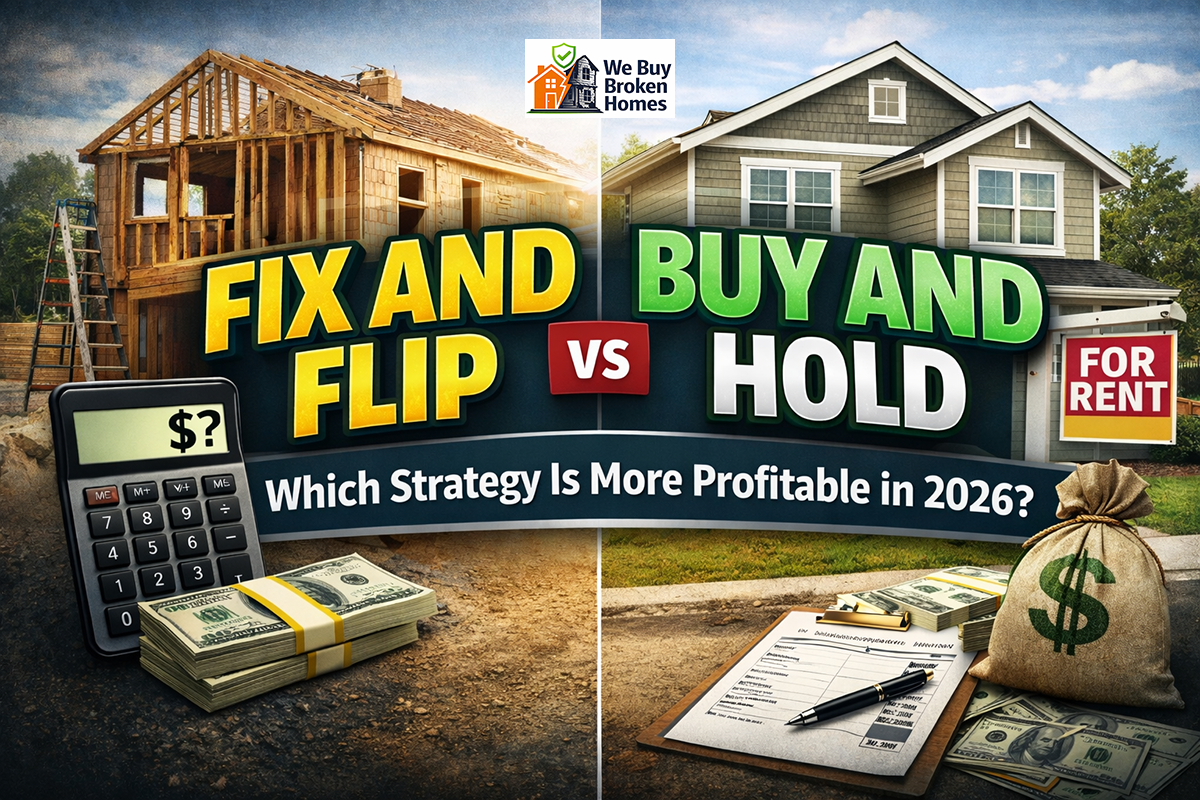
Fix and Flip vs Buy and Hold: Which Strategy Is More Profitable in 2026?
If you’re choosing between a fast flip and a long-term rental in 2026, the “better” strategy comes down to your cash position, your risk tolerance, and whether your local market rewards speed or stable cash flow.
In 2026, margins matter more than ever. Flips can still be lucrative, but tighter spreads mean you need disciplined buying, accurate rehab scopes, and conservative resale assumptions. Buy-and-hold can look “slower,” but it often wins when your financing, rents, and reserves are dialed in.
The quick answer (for most investors)
Choose Fix & Flip if:
- You can source discounted deals consistently (off-market, distressed, inherited, vacant).
- You have reliable contractors and can control timeline + budget.
- You can tolerate short-term risk (permits, surprises, market shifts).
- You want to recycle capital quickly into the next deal.
Choose Buy & Hold if:
- You want predictable monthly cash flow and long-term wealth building.
- You’re comfortable with property management and reserves.
- You can lock solid financing and your rent-to-cost numbers work.
- You want tax advantages (depreciation and long-term planning).
Profit drivers in 2026: what actually moves your numbers
For Fix & Flip
- Spread: ARV − (Purchase + Rehab + Holding + Selling costs).
- Time: every extra week increases holding costs and risk.
- Accuracy: underestimating rehab or overestimating ARV destroys ROI.
- Liquidity: cash reserves reduce “forced decisions” mid-project.
For Buy & Hold
- Cash flow: Rent − (PITI + repairs + CapEx + vacancy + management).
- Debt terms: rate + amortization + down payment drive cash flow.
- Rent strength: neighborhood demand and tenant quality.
- Durability: renovations that reduce future maintenance win long-term.
Fix & Flip vs Buy & Hold: side-by-side comparison
Fix & Flip
- Timeline: weeks to months
- Income type: lump-sum profit
- Risk profile: higher (budget, delays, resale price)
- Capital need: moderate to high
- Best skill: acquisition + project management
Buy & Hold
- Timeline: years
- Income type: monthly cash flow + equity
- Risk profile: moderate (tenants, repairs, cycles)
- Capital need: lower if financed well
- Best skill: underwriting + operations
Deal math you should run before choosing a strategy
Flip checklist (fast underwriting)
- ARV: use sold comps (not active listings) and stay conservative.
- Rehab: line-item scope with a buffer for surprises.
- Holding costs: interest, utilities, insurance, taxes, lawn, trash, HOA.
- Selling costs: agent fees, concessions, staging, closing costs.
- Exit plan: if the market softens, can you rent it and hold?
Tip: Many investors start with a MAO (Maximum Allowable Offer) so they don’t “fall in love” with a deal. If you’re building a quick system, make your first number the disciplined number.
Buy & Hold checklist (rental underwriting)
- Rent: verify with comparable rentals and current demand.
- True expenses: taxes, insurance, maintenance, CapEx, vacancy, management.
- Reserves: plan for big-ticket items (HVAC, roof, plumbing).
- Debt terms: model rate changes and conservative rent assumptions.
- Tenant quality: screening systems matter as much as the house.
Tip: Great rentals are often “boring deals” with clean numbers. Avoid thin cash flow that depends on perfect occupancy.
What “more profitable” means (and how to define it)
“Profitability” isn’t one number. Decide what you’re optimizing for:
- Cash-on-cash return: cash flow relative to cash invested (common for rentals).
- Annualized ROI: return adjusted for time (critical for flips).
- Total wealth: equity paydown + appreciation + cash flow (long-term holds).
- Liquidity: ability to access cash for new deals (flips often win here).
When flips win in 2026
- You can buy below market (distressed, inherited, vacant, heavy cosmetic, or title/clean-up issues).
- You have a tight rehab team and can keep projects on schedule.
- You’re in a market where retail buyers still pay a premium for renovated inventory.
- You have multiple exit options (sell retail, rent, or wholesale if needed).
When buy-and-hold wins in 2026
- Rents are strong relative to purchase price and expenses.
- You can lock financing that keeps monthly cash flow positive.
- You want a portfolio that compounds over time (cash flow + debt paydown).
- You prefer fewer “surprise” variables than a full rehab timeline.
Next steps (make this actionable)
If you want better deals for either strategy, your edge is sourcing properties other buyers ignore—distressed, inherited, tenant-occupied, or needing repairs. We can help you connect to cash buyers and move properties fast.
Disclaimer: This content is for educational purposes and isn’t financial, tax, or legal advice. Always verify numbers and consult pros for your situation.
FAQ: Fix and Flip vs Buy and Hold in 2026
Is fix and flip still profitable in 2026?
It can be, but the winning formula is stricter: buy deeper discounts, budget conservatively, and shorten timelines. In tighter-margin environments, your purchase price and project management become the profit.
Is buy and hold safer than flipping?
Usually, yes—because you’re not dependent on a single resale event. But rentals still carry risks: vacancies, repairs, and tenant issues. Strong underwriting and reserves make buy-and-hold much “safer.”
Which strategy is better for beginners?
Many beginners do best with a light rehab rental or a straightforward cosmetic flip—something that builds skills without blowing up risk. If you’re new, choose the strategy that matches your time and operational strengths.
What numbers should I track on every deal?
For flips: ARV, rehab, holding costs, selling costs, timeline, and your MAO. For rentals: verified rent, true expenses, vacancy, reserves, and cash-on-cash return.
Can I combine both strategies?
Yes. Many investors flip to build capital and then roll profits into rentals for long-term cash flow. A “hybrid” approach also works: renovate, rent, then refinance (when favorable) or sell later.